In partnership with Sequence™
Sequence™ Insoles — Firstcause Lab

Insoles that don't correct your feet. They teach them.

3D-printed to your exact gait signature from DIERS 4D data — thousands of pressure readings from how you actually walk and run, not a foam impression of how you stand.

Enquire about insoles
Why should you care

Most insoles are built to hold your foot still. Your body doesn't need holding. It needs better information.

Every step is an exchange between your body and the ground, read by thousands of sensory receptors in your feet. Your nervous system decides how you move based on what those receptors report — and when the signal is unclear, it plays it safe: compensations, asymmetries, the same tight spots returning again and again. Sharpen the signal, and movement can change with every step you take.

In a league of its own

Not another arch support.

Almost everything on the market — off-the-shelf or "custom" — works the same way: brace the foot into a corrected position and hope the body complies. Sequence™ works on the opposite principle.
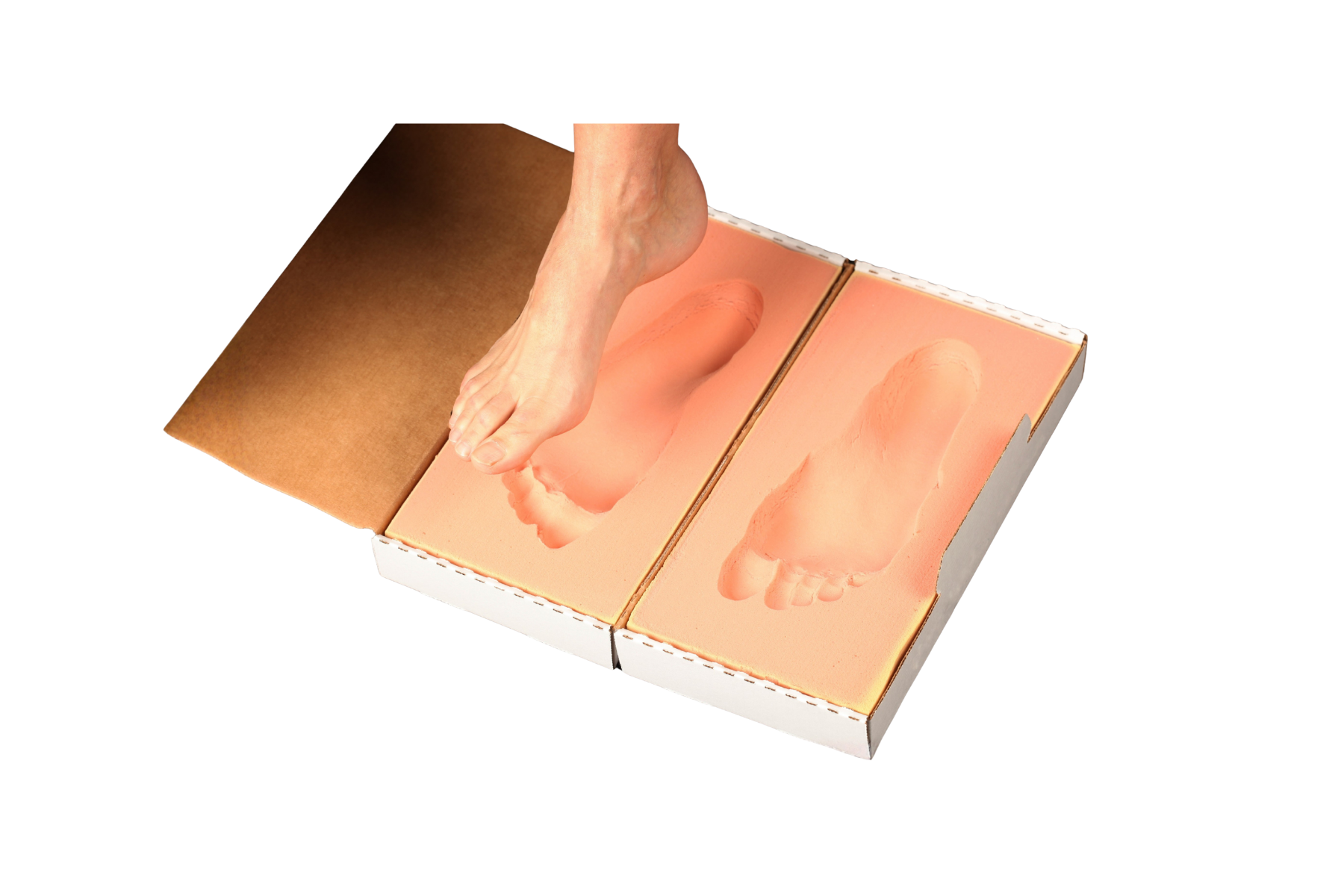
A traditional foam-box impression — a foot pressed into casting foam to mould a static orthotic
Everything else · Mechanical correction

Fixes. Supports. Unloads.

A static shape moulded from a standing foot, doing the same passive job at every moment of every stride. The foot leans on the device — and learns nothing. Stop wearing it, and nothing has changed.
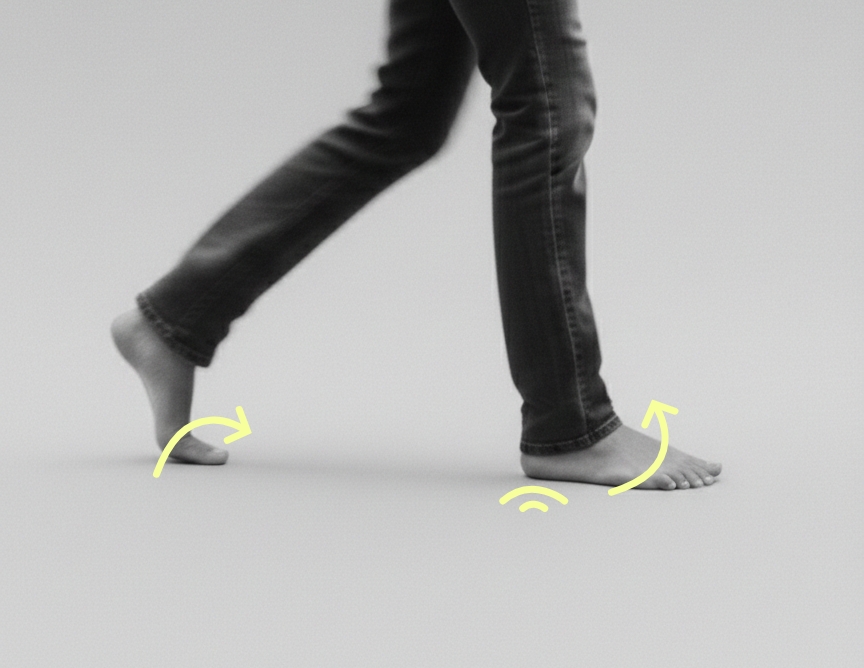
Bare feet mid-stride with motion annotations — movement as the nervous system reads it
Sequence™ · Neuroadaptive regulation

Informs. Modulates. Teaches.

A 3D-printed silicone lattice, tuned region by region to your gait data. Targeted pressure changes help your foot send clearer signals to the nervous system — subtle, continuous feedback through the whole movement, with every step.

One holds a symptom in place. The other gives your nervous system the information to move better on its own.
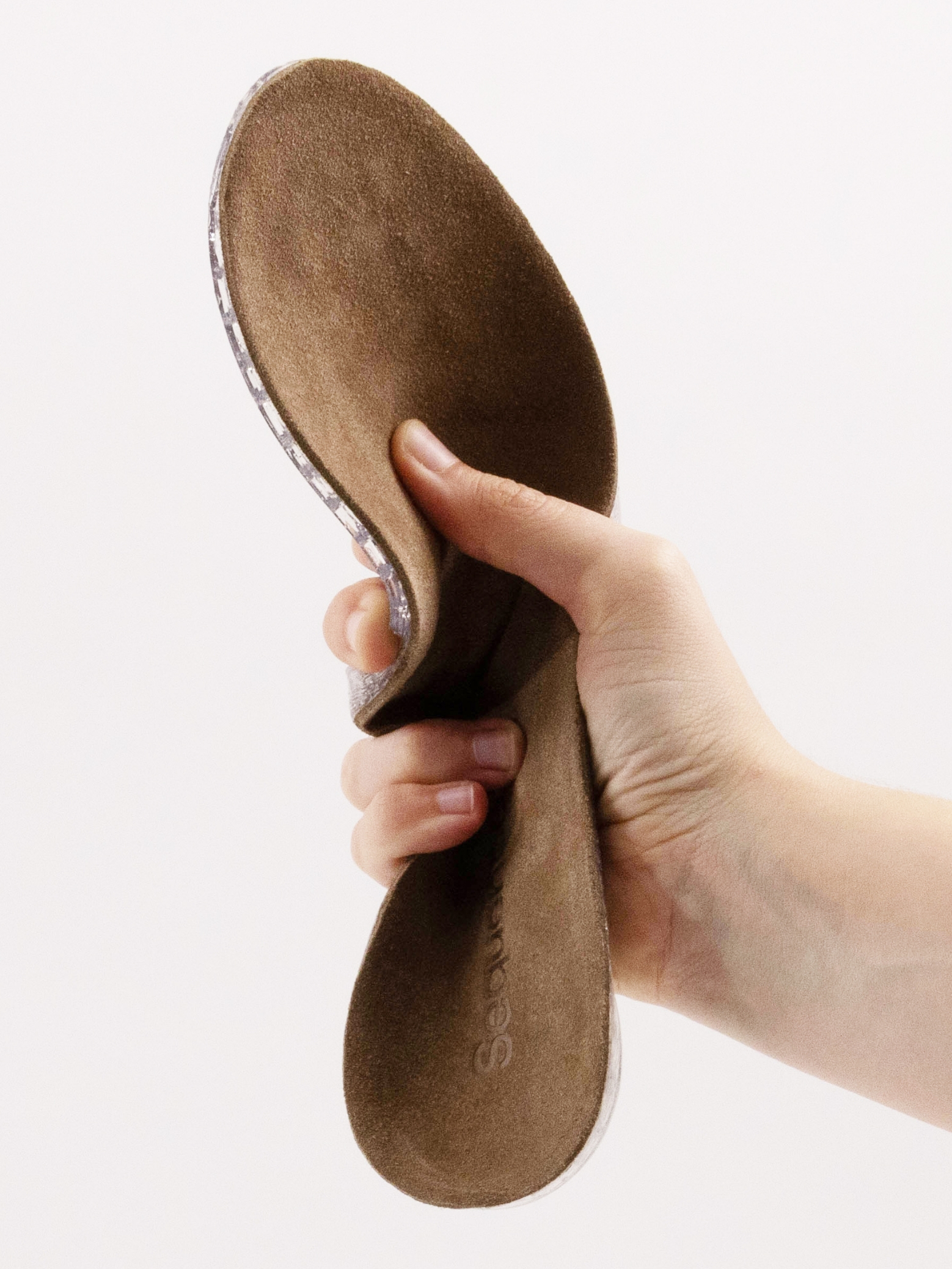
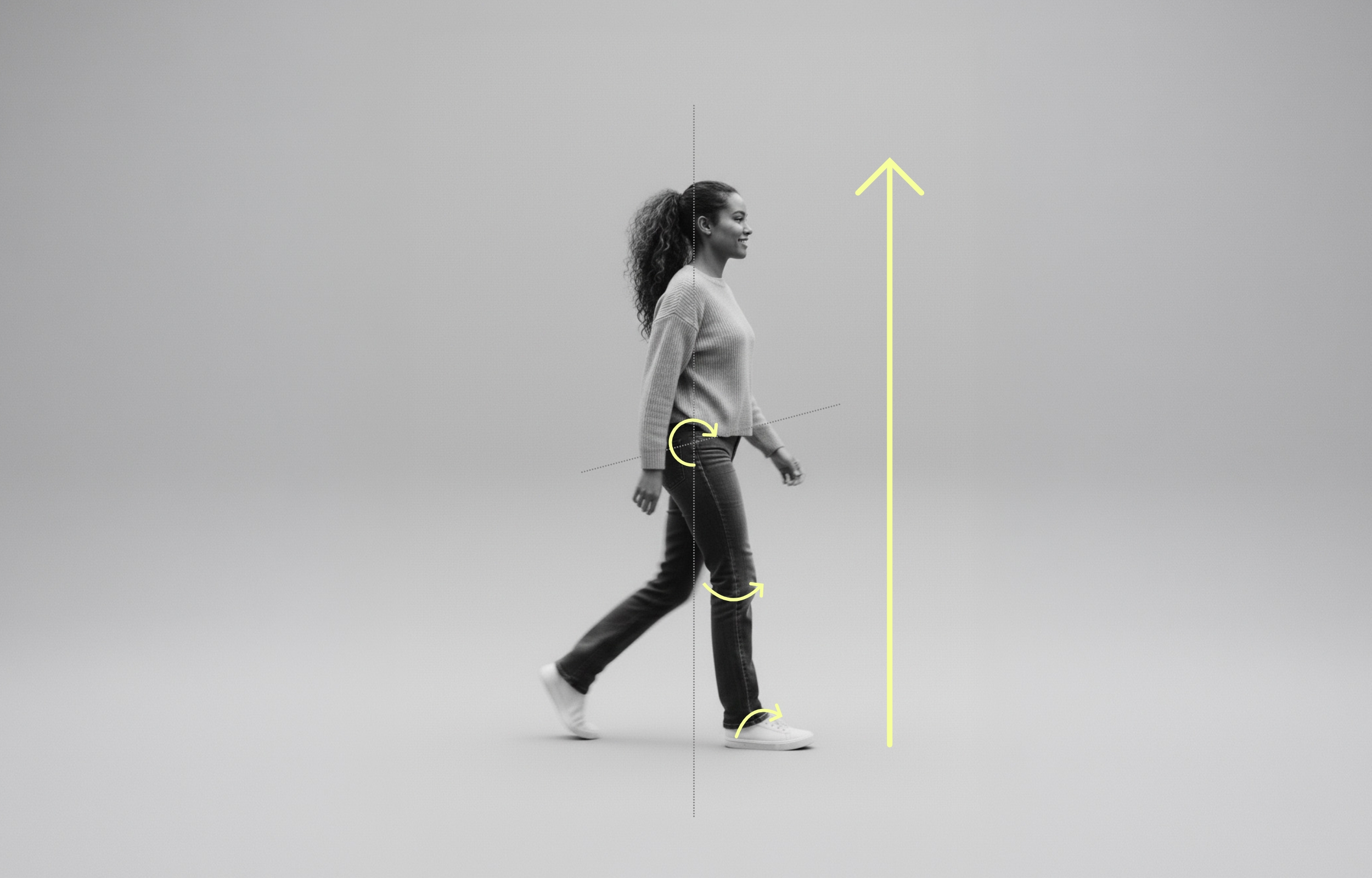
From gait data to printed lattice

Designed from your data. Printed for your step.

This is what makes the partnership one of a kind: your insoles are engineered directly from the same research-grade gait analysis we run in the lab — spine, leg axis and foot pressure captured together while you actually move.

01

Measure

A 30-minute DIERS 4D gait analysis in our Hackney lab — 5,000+ pressure sensors reading every phase of your stride, alongside spine and leg-axis capture. No special preparation needed.

02

Design

The Sequence™ design environment turns your data into a lattice: cell geometry, density and wall structure tuned zone by zone — dampen load here, guide transition there, sharpen sensory input where your gait needs it.

03

Print

3D-printed in meshed silicone and finished by hand. One pair, one gait signature — no two are alike, because no two people move alike.

04

Wear & review

Worn in your everyday footwear, working with every step. Movement evolves — so it can be re-measured, and the design refined with it.

£280
Assessment + insoles, all in
30 min
One lab appointment
2–4 wks
Design, print & delivery
Based on evidence

Measured, published, peer-reviewed.

The approach isn't a theory we like — it's a method with published clinical research behind it, in exactly the direction you'd want: measurable biomechanical change, and a strong case for individual customisation.

Clinical evaluation · University Hospital Erlangen, 2025

Custom 3D-printed meshed-silicone orthotics, evaluated clinically

Orthotics designed from foot scans and dynamic gait data — the same method behind Sequence™ — showed measurable biomechanical improvements, including optimised lower-limb alignment and redistributed plantar pressure.

Gait biomechanics · VU Amsterdam & Amsterdam UMC, 2022

Why one-size-fits-all was never going to work

Varying the density and structure of 3D-printed silicone soles measurably changed pressure and contact patterns — but the effects differed strongly from person to person. The researchers' conclusion: this technology should be customised to the individual.

Sequence™ — SEQ.

Sequence™ is a Danish developer of highly customised, computationally designed footwear technology. Firstcause Lab is a Sequence™ partner lab: the analysis happens in London, the design and printing at Sequence™.

Who it's for

For anyone whose feet are quietly working against the rest of their body.

01

The recurring-niggle runner

The calf, knee or hip issue that returns every time volume goes up.

02

The orthotic sceptic

You've tried insoles before. They helped a bit, until they didn't — or lived in a drawer.

03

Post-rehab, returning to load

Cleared to train, but the old compensation patterns came back with you.

04

The asymmetric loader

Your gait analysis shows one side always takes the hit — now there's a tool built for exactly that finding.

05

All day on your feet

Standing, walking, coaching, operating — thousands of steps a day, every one an opportunity.

06

The marginal-gains athlete

Nothing hurts. You just want every stride to feed the nervous system better information.

Before you decide

The questions worth asking.

01How is this different from custom orthotics from a podiatrist?+

Two ways. The data: traditional custom orthotics are shaped from a foam box impression or a static scan of your foot at rest. Sequence™ insoles are designed from DIERS 4D dynamic gait data — how your foot loads through every phase of an actual stride, alongside what your spine and leg axis are doing at the same time.

The principle: orthotics brace the foot into a corrected position; the effect lasts as long as you wear them. Sequence™ tunes the sensory feedback your foot receives, so your nervous system can adjust the movement itself.

02And from off-the-shelf "performance" insoles?+

An off-the-shelf insole is designed for a statistically average foot doing a statistically average walk. Yours is printed from your own pressure map — the lattice differs zone by zone, and pair by pair. There is no version of this product that exists before you're measured.

03I already wear orthotics. Can I switch?+

Often, yes — and your gait analysis is the right place to decide. We'll see exactly what your current setup is doing to your pressure patterns and talk through whether a regulative approach suits your case. For medically prescribed orthotics, we'd coordinate with your prescribing clinician rather than around them.

04What exactly does the £280 include?+

Everything: the 30-minute in-lab gait assessment (no special preparation needed) and your custom-printed pair, designed and manufactured by Sequence™ and delivered within 2–4 weeks. If you've recently had a DIERS assessment with us, mention it in the enquiry — we may be able to work from your existing data.

05Will I feel anything?+

The input is deliberately subtle — information, not intrusion. Some people notice a change in how they load immediately; for most, the effect accumulates, because it works step by step: thousands of small, clearer signals a day rather than one blunt correction. That's the point.

06What happens when my movement changes?+

That's the outcome we're after. Movement isn't fixed, so the tool shouldn't be either: re-measure, compare against your original data in real numbers, and refine the design if your gait has evolved. It's the same principle as everything else in the lab — measure, act, re-measure.

Sequence™ insoles enquiry

Start with your data.

Tell us a little about what's going on and we'll be in touch within 48 hours to book your gait assessment — or answer anything still on your mind first.

Your details
A recurring issue, a goal, or just curiosity — all valid starting points.

We reply within 48 hours. Your phone number is used for scheduling only. See our privacy policy.